
Many Phoenix homeowners believe their concrete or clay tile roof is the primary defense against water. While tile is extremely durable, it is only one part of the system. In Arizona's extreme climate, most tile roofs fail from the inside out — long before the tiles themselves wear out.
Tile Is Only One Part of the System
This guide explains how a Phoenix tile roof actually works, why underlayment and flashing fail first, and what that means for your home in Phoenix, Scottsdale, Mesa, Chandler, and across the Valley.
How a Phoenix Tile Roof System Really Works
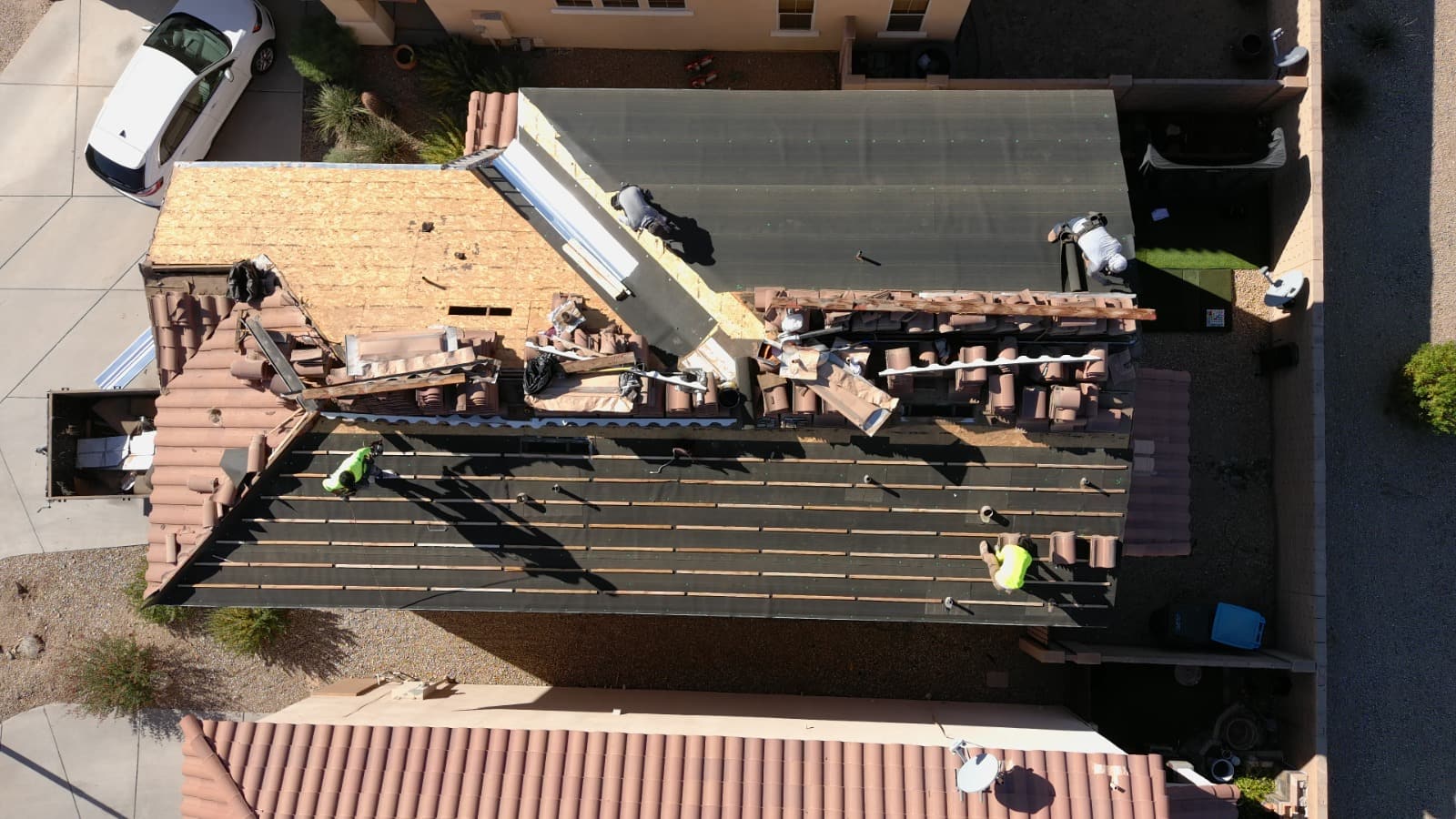
A properly installed tile roof has several layers working together:
- 1Tile — The visible surface. It sheds the majority of water and protects the layers underneath from UV and physical damage. Concrete and clay tile can last 40–50+ years in the Valley.
- 2Underlayment — The true waterproofing layer. This is the continuous membrane or felt system installed directly on the roof deck. It is what actually keeps water out of your home.
- 3Flashing — Metal pieces that seal critical transitions (pipe penetrations, chimneys, skylights, walls, valleys, and eaves).
- 4Roof deck — The plywood or OSB sheathing that supports everything.
The Tile Protects the Underlayment. The Underlayment Protects the House.
When the underlayment fails, water can enter even if every tile still looks perfect from the street.
Why Arizona Heat Destroys Underlayment Faster
Phoenix roof surfaces regularly reach 150–170°F in summer. This extreme heat, combined with intense UV exposure, accelerates the breakdown of underlayment materials. Learn more about how Arizona UV damages your roof and thermal expansion damage on Phoenix roofs. Common issues include:
- 1Dry-out and cracking of traditional felt underlayments
- 2Loss of flexibility in modified bitumen and synthetic membranes
- 3Thermal expansion and contraction that stresses seams and fasteners over thousands of daily cycles
- 4UV degradation of any underlayment that becomes exposed when tiles shift or crack
Underlayment Wears Out Before the Tile Does
Most underlayment systems in the Phoenix area have a realistic lifespan of 15–25 years — significantly shorter than the tile above them. Once underlayment begins to fail, small amounts of water can migrate beneath the tile and into the deck or attic without any obvious exterior signs.
The Role of Flashing and Penetrations
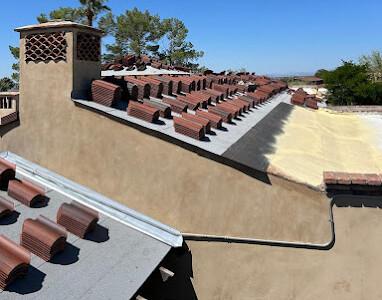
Flashing is one of the most common failure points on Phoenix tile roofs. Pipe boots, skylight curbs, chimney flashings, and wall transitions rely on sealants and metal that degrade under constant heat and UV. When sealant dries and cracks, or when flashing lifts, monsoon rain and wind-driven water can enter directly. Because tile roofs are designed to shed water over the surface, any breach at a penetration or transition allows water to run underneath the tile and reach the underlayment. See our guide to debris, settled tile, and flashing after the monsoon.
Why Your Roof Can Look Fine but Still Leak
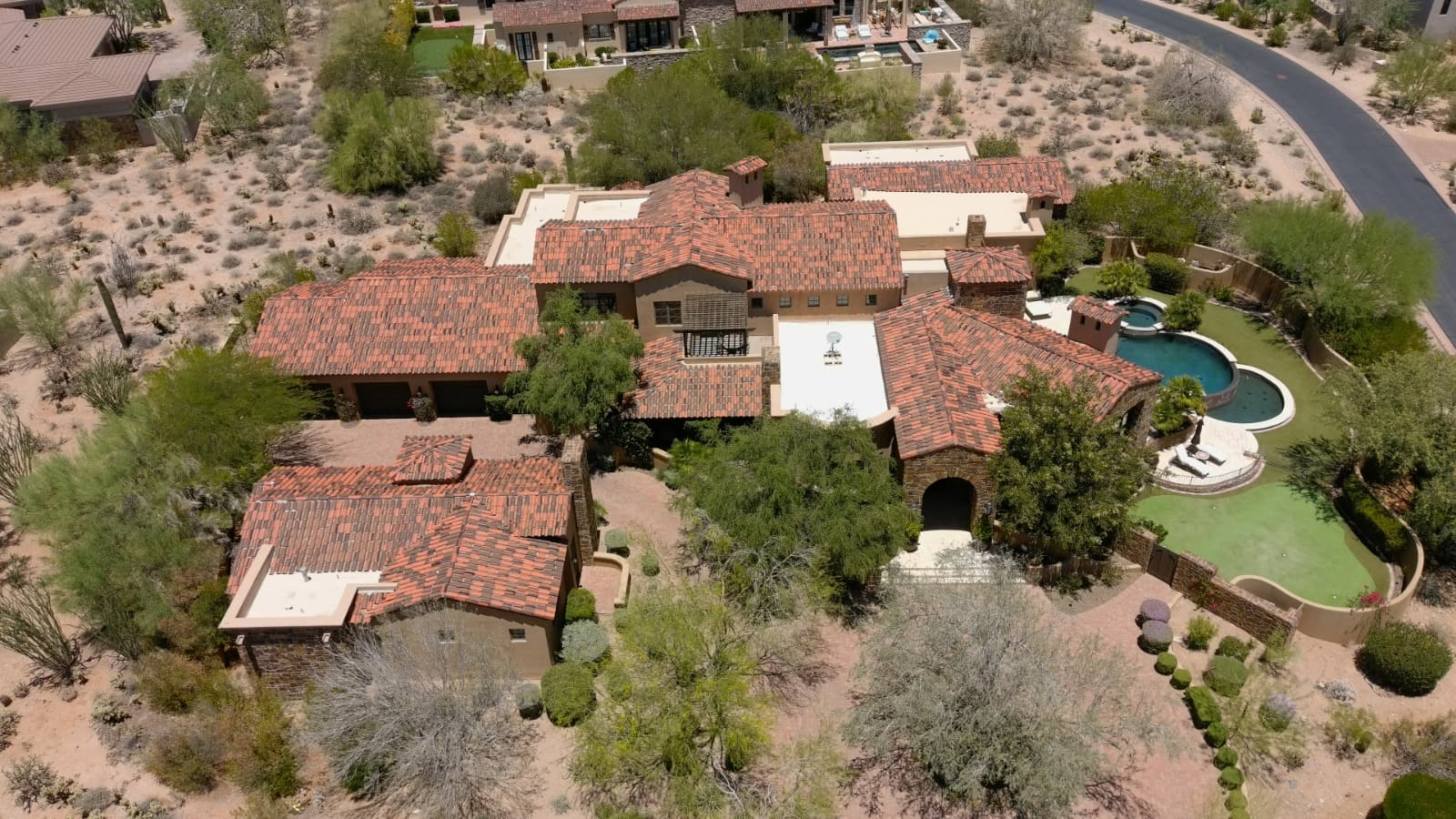
This is one of the most frequent surprises for Phoenix homeowners:
- 1Tiles can shift slightly during high winds and then settle back into place, leaving no obvious missing tiles.
- 2Cracked or broken tiles may be present but hidden from ground view.
- 3Underlayment can develop cracks, holes, or seam failures while the tile field still appears intact.
- 4Water can travel horizontally under the tile before finding a way into the attic or living space.
Leaks Often Show Up Long After the Damage
As a result, many leaks appear months or years after the original damage occurred, often showing up as ceiling stains far from the actual entry point. Read more about the hidden damage after a roof leak.
What “Lift and Relay” Means
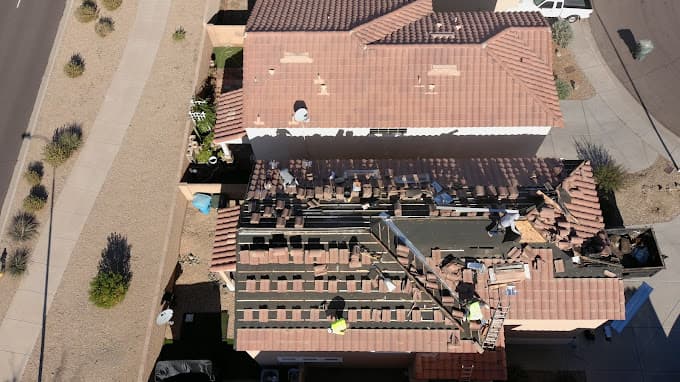
When underlayment reaches the end of its life but the tile is still in good condition, the standard solution is a lift and relay. In this process, the existing tiles are carefully removed, the old underlayment is stripped, a new waterproofing system is installed, and the original tiles are reinstalled. This approach preserves the tile (which is usually still functional) while restoring the critical waterproofing layer underneath. It is typically far more cost-effective than a full roof replacement when the tile itself is still serviceable. Compare your options in our guide to tile roof repair, lift & relay, or replacement.
Key Takeaways for Phoenix Homeowners
- 1The tile is not the waterproofing — the underlayment is.
- 2Arizona heat and UV shorten underlayment life well before the tile fails.
- 3Flashing and penetrations are high-risk areas that require regular attention.
- 4A roof can look excellent from the ground and still have active underlayment issues.
- 5Professional inspections focus on the layers and details that homeowners cannot easily evaluate.
Next Step
If your Phoenix home has a tile roof that is 15–20 years old or older, or if you've noticed any signs of staining, the underlayment system is worth evaluating. A thorough inspection can determine whether the waterproofing layer is still intact or if a lift and relay (or other repair) is recommended. Not sure when to schedule one? Read how often you should have your roof inspected in Phoenix.
Schedule a Tile Roof Evaluation With XRP Roofing
Contact XRP Roofing to schedule a professional roof evaluation. We'll assess the full system — tile, underlayment, flashing, and drainage — and give you a clear picture of your roof's condition. Serving Phoenix, Scottsdale, Peoria, Glendale, Mesa, Chandler, Goodyear, and surrounding communities. Licensed, bonded, and insured — Arizona ROC #350898. Call (623) 300-8097 or request an inspection online.
Frequently Asked Questions
Is the tile the waterproofing layer on a Phoenix tile roof?
No. The tile sheds most of the water and protects the layers below from UV and physical damage, but the underlayment installed on the roof deck is the true waterproofing layer.
How long does tile roof underlayment last in Phoenix?
Most underlayment systems in the Phoenix area have a realistic lifespan of 15–25 years, significantly shorter than concrete or clay tile, which can last 40–50+ years.
Can a tile roof leak if the tiles look fine?
Yes. Underlayment can crack or fail at the seams, and flashing can lift or lose its sealant, while the tile field still looks intact from the ground.
What is a lift and relay?
The existing tiles are carefully removed, the old underlayment is stripped, a new waterproofing system is installed, and the original tiles are reinstalled. It is typically far more cost-effective than a full replacement when the tile is still serviceable.
